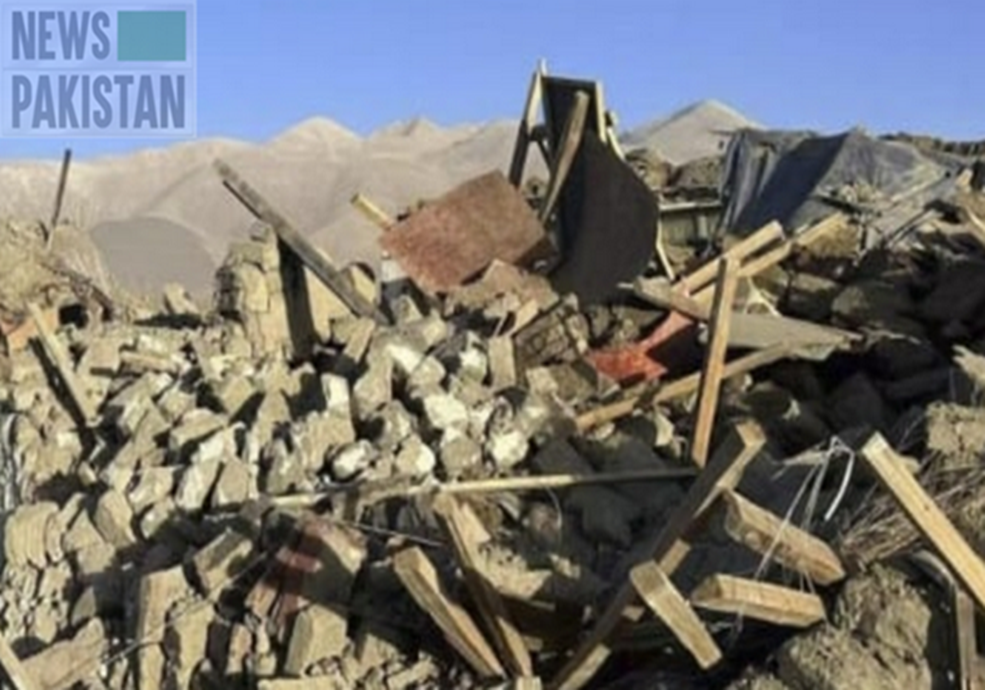

KARACHI (NPTV/UN): Human being is constantly destructing the planet Earth by acts like cutting trees and intensify agriculture.
Aiming to promote harmony with nature and the Earth, United Nations celebrates 22nd April as International Mother Earth Day. Billion people participate in activities to celebrate this day.
Adopted in 2009, Int’l Mother Earth Day is meant to recognise a collective responsibility to ameliorate harmony with the Earth and with nature.
UN framework Convention on Climate Change and the Paris Agreement act to ameliorate global cooperation to handle climate change by means of edification and public awareness.
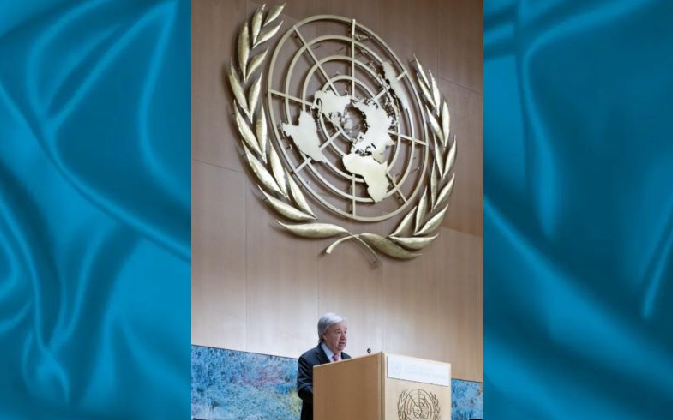
This year Secretary General, António Guterres, stated:
“Our Power, Our Planet…Mother Earth has given us everything. We have repaid her with reckless destruction – polluting her air, poisoning her waters, destabilizing her climate, and pushing countless species to the brink. She is sounding the alarm – through fire, flood, drought, deadly heat, and rising sea levels. Yet our response is falling dangerously short.
“We have the solutions. In most of the world, renewable energy is now the cheapest source of electricity. Climate action is creating jobs, strengthening economies, and saving lives. But we are moving too slowly. We must break our dependence on fossil fuels, protect and restore nature at scale, and deliver climate justice for those who did least to cause this crisis yet suffer the most.
“Around the world, Young Activists, Indigenous Peoples, Scientists, and Civil Society are already leading the way. Their power is our power. Governments and business must match that courage with urgent action – for our planet, for all who depend on her, and for every generation to come.“
Australia’s information ecosystem is under threat from a growing proliferation of misinformation and disinformation on climate change, according to the Senate report into the issue.
The International Federation of Journalists (IFJ) and its Australian affiliate, the Media, Entertainment and Arts Alliance (MEAA) urge the Australian government to urgently take heed of key recommendations concerning support for regional and independent media and media literacy.
The Senate’s select committee on information integrity on climate change and energy’s final report, The Integrity Gap: Restoring Trust in the Climate and Energy Debate, released in March, explores climate and energy mis/disinformation in the “digital town square” –
How it is being financed, produced and disseminated, as well as its impacts on domestic and international media narratives. It noted that climate change or the environment is one of the top topics Australian audiences specified among misinformation they encounter online.
The Senate’s select committee received 243 submissions and conducted ten hearings to inform the report’s findings. The committee heard from a broad range of submitters that debate about climate change and energy should not be silenced, but equally that a multifaceted strategy was needed to address its growing impact on public trust.
In terms of the media’s role in the issue, the report’s findings underscored the need for tactical actions (like fact-checking) as well as ‘longer-term bets’ for structural reforms (by supporting local journalism and media literacy) and support for the development of a not-for-profit news sector by enabling news organisations that produce public interest journalism to be eligible for deductible gift recipient status.
Australia has been selected by the IFJ as a key focus country under a UNESCO-funded global project which aims to strengthen journalists’ capacities, build public trust in climate reporting, and lead a unified, union-driven global response to climate disinformation.
In its mapping, IFJ found that climate disinformation in Australia is particularly propagated by misleading narratives, climate obstruction, politicisation, greenwashing, industry and vested interest influence, low media literacy exploitation and Aldriven falsehoods.
Misinformation and disinformation (44%) is the third major challenge journalists encounter when reporting on environmental issues, according to a survey conducted by the IFJ in December 2025. Nearly half of respondents identified lack of training (49%) as the primary challenge, closely followed by limited time and resources (48%).
Newspakistan.tv

Professor at Iqra University, writes on UN activities, health and social issue.