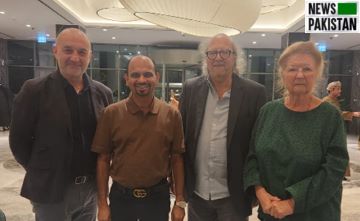
MUSCAT: G. M. Jamali, Member at Large, Federation of Asia Pacific Journalists (FAPaJ), has warned that influence of Artificial Intelligence will have to be contained.
He was speaking on the occasion of the Meeting of the Executive Committee of the FAPaJ, being held here (16th to 22nd April, 2026) with the IFJ Administrative Committee and Secretary General Anthony Bellanger.
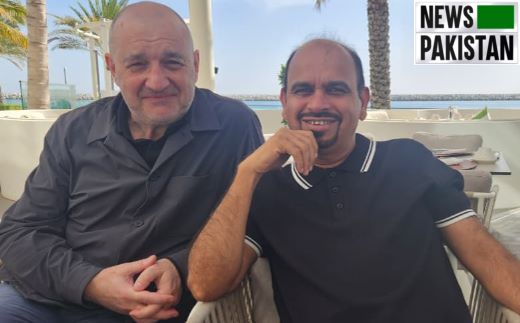
MUSCAT: Anthony Bellanger Secretary General IFJ (L) and G. M. Jamali Member at Large FAPaJ snapped on the occasion of the Meeting of the Executive Committee of the FAPaJ with the IFJ Administrative Committee & SG.
__________
FAPaJ’s Member at Large, G. M. Jamali maintained: “In the present time flag-bearers of truth face greater risks then ever
before. As Secretary General of UN recently noted: ‘Journalists face
attacks, detentions, censorship, intimidation, violence and even death
— simply for doing their jobs. We are seeing a sharp rise in the
number of journalists killed in conflict areas — particularly in Gaza.’
Gaza: During Hamas-Israel conflict, two hundred and sixty journalists and
Media Workers have been slain in Gaza. That will be remembered
in the annuls of history as the deadliest place for those attempting to
report the fact. But their killers roam free.
South Asia: Countries of South Asia happen to harbor 2 billion people. That
means twenty-five percent of humanity lives in this region.
The decline of Press Freedom means decline of democracy. This can
be calculated by the fact that a colossal number of voters use their
right to franchise. But Media could not report the true state of
affairs.
As traditional Media is becoming obsolete, audience is moving
towards digital consumption. A great number of South Asians rely
on Mobile Phones for information.
The journalists and Media workers are finding it more and more
difficult to carry out their duties. Press Freedom is declining, state
and non-state actors are involved in violence against them.
Afghanistan:
United States officially completed its military withdrawal from
Afghanistan on 30th of August, 2021.
150 Afghan journalists, who crossed the border (many with their
families), contacted Pakistan Federal Union of Journalists (PFUJ)
for support.
PFUJ, not only provided board and lodging, but also introduced
them to diplomatic missions for asylum in the West. All these
activities were funded by International Federation of Journalists
(IFJ).
It is pertinent to mention here that before Taliban takeover on 15th
August, 2021, there were 550 registered Media outlets in
Afghanistan. 100 TV stations and 300 Radio stations were operating
independently.
In the pre-Taliban era, two hundred dailies and periodicals were
being published. A considerable number of News Agencies and
Digital outlets were also active in providing information to millions
of Afghanis. Most of those were financed by foreign entities.
Following Taliban takeover, sixty percent of those 550 outlets ceased
to exist. Earlier, 8,290 men and 2,490 women journalists were
employed by these outlets. Seven thousand journalists and Media
workers were shown the door by Taliban.
Presently, dozens of Major TV/Radio Stations, YouTube, X,
Facebook, Telegram and other digital platforms are being operated
by Taliban. Authors of opinions in social media, not aligned with the
Taliban ideology, are punished.
Pakistan: In the World Press Freedom Index that ranks 180 countries,
Pakistan finds itself at the 158th position.
Since the year 2000, one hundred and fifty-five journalists and
Media Workers have been neutralized in Pakistan.
Pakistan consistently ranked as one of the deadliest countries for
media professionals.
Particularly in the provinces of Sindh (ruled by the feudal lords for
generations) and Balochistan (where chieftains reign supreme. Then
there are the proscribed militant extremist/separatist groups).
In the recent months, laws have been enacted to put those
journalists behind bars who report truth about various institutions
including agencies and judiciary.
Hence legal harassment is another weapon being used in. Policing of
TV and Radio is carried out by Pakistan Electronic Media
Regulatory Authority (PEMRA). It silences those reporting
critically, by suspending licenses or blocking channels.
Professionals as well as non-journalists often attempt to convey their
message by means of Social Media to bypass restrictions, creating an
alternative free speech zone. State even resort to block hundreds of
thousands of URLs, impose ban on X and YouTube.
Independent investigative platforms are thus silenced. Those who
fail to toe the line could be threatened, kidnapped and eliminated.
Authorities also attempt to regulate broadcasters by changing the
rules. Laws like the Prevention of Electronic Crimes Act (PECA) are
heavily amended and used to restrict online expression.
PFUJ is thankful to Dominique Pradalié, President IFJ who joined
us on 14th February 2025 to protest against PECA Amendment Bill
in front of the Parliament building in Islamabad.
During ongoing Iran-US conflict, Media had been ordered (in the
month of April, 2026) not to cross the red-lines and restrain from
airing speculative pieces about terms with Gulf states.
Many are running their YouTube channels from USA and UK.
However, not all manage to escape. ARY’s anchor Arshad Sharif
fled to Kenya when he received threatening messages. But he was
assassinated on 23rd October, 2022.
Here I would like to make it clear that not all who are operating
YouTube channels from abroad are doing any service to journalism.
Many are propagating the messages of a certain political party,
group or institution and are thus compensated for that.
Only ten Media Moghuls are running the industry as a fiefdom.
Then there are fake political leaders, and mega-corrupt
bureaucrats, who garnered tremendous amount of wealth by
swindling the common people, who they were supposed to serve.
With presence in more than one form of Media Sector, the ten
Moghuls reach 90 percent of the (TV, Radio, Print and Online)
audience. Due to this, there is also a lack of diversity in views.
Moreover, since government can stop advertisements or payments
for them, these Media Moghuls toe the official line. Those who
refused to propagate the state narrative, had to face severe financial
disaster and those employed by them lost their jobs.
Journalists are barred from writing on certain issues and
institutions. They cannot enter and report from a number of
(sensitive) areas.
But since the flow of rupees is on, the owners of Media Houses don’t
let their workers go for any adventurism. These Ten Groups
concentrate on generating money and reaping benefits relying on
the outdated, state-controlled narratives.
The same ten Media Dons never implement government-imposed
Wage Board Award. Majority of journalists work for inadequate
salaries. Very often they are not paid for months. At least one such
reporter committed suicide due to financial strain.
Ethnic groups, political or politico- religious parties have penetrated
into the governing bodies of many Clubs, Unions and Associations.
Many such entities have become camp offices of such
ethnic groups, political or politico- religious parties.
Individuals, who have nothing to do with journalism, are controlling
many of the Clubs, Unions and Associations. They regulate
memberships and make non-journalist partisan members, while
keeping the real journalists out of the Clubs, Unions and
Associations.
Agents of ethnic groups, political or politico- religious parties usurp
huge amount of money and residential plots, that are meant for
genuine journalists.
AI: While AI is helping the Media Industry to a certain extent. Its
influence will have to be contained. Deepfakes and propagation of
misinformation will have to be handled strictly.
__________
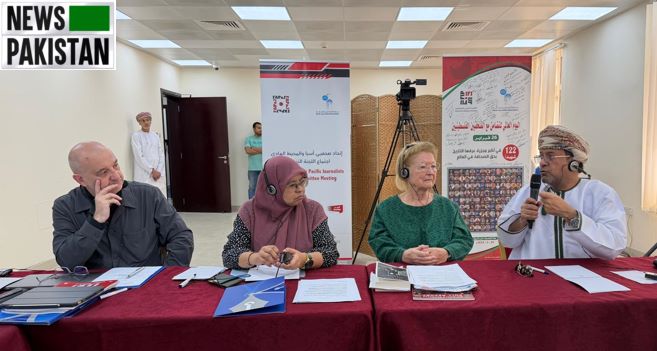
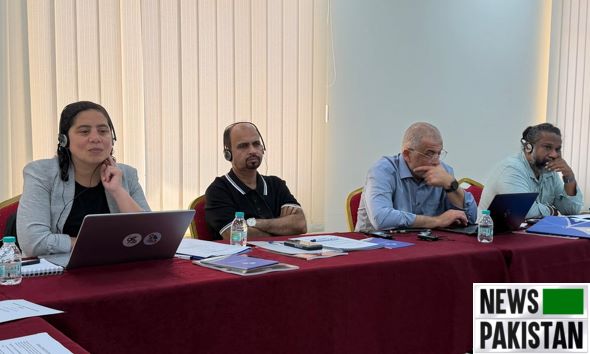
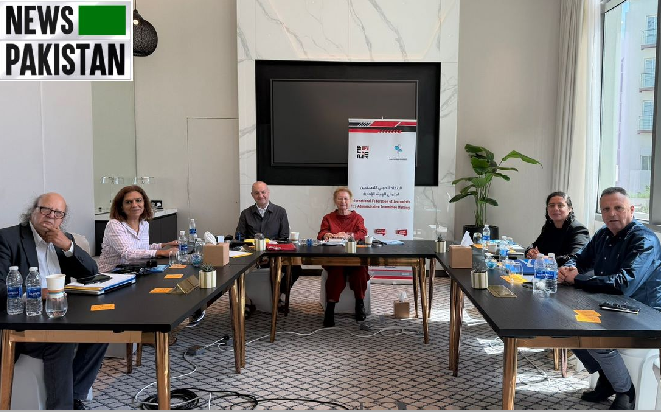
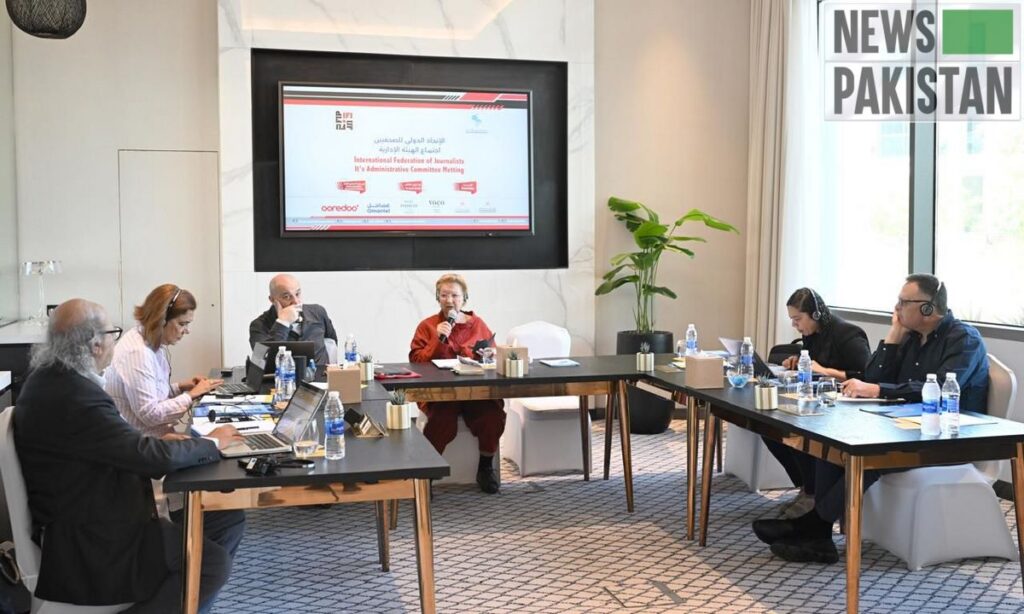
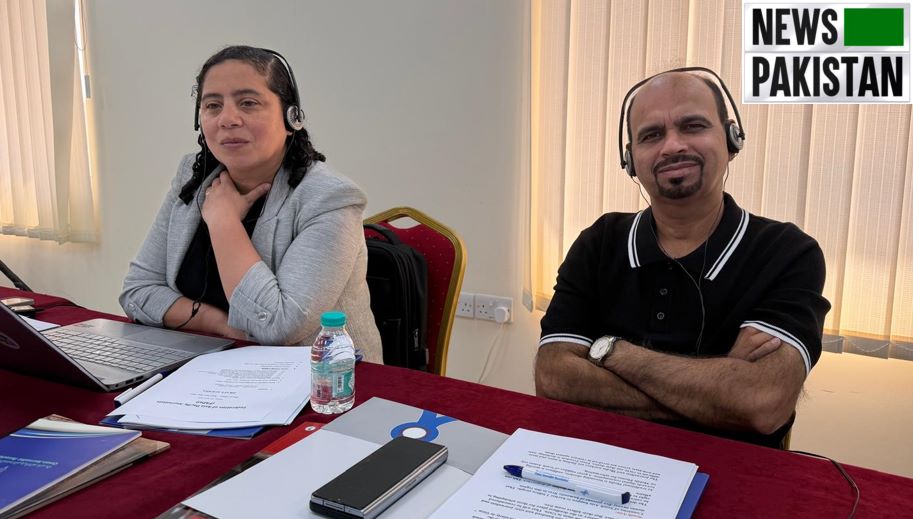
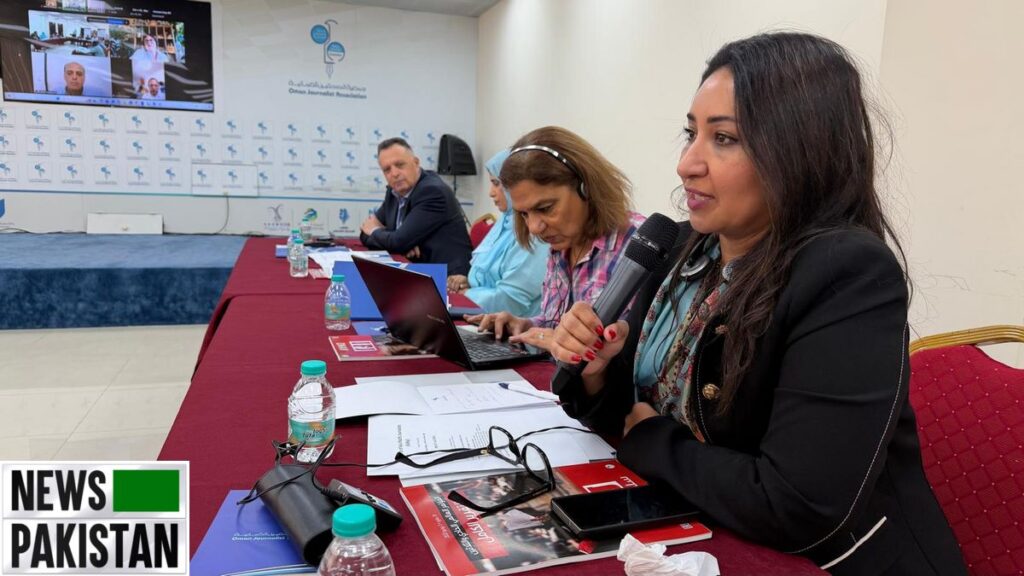
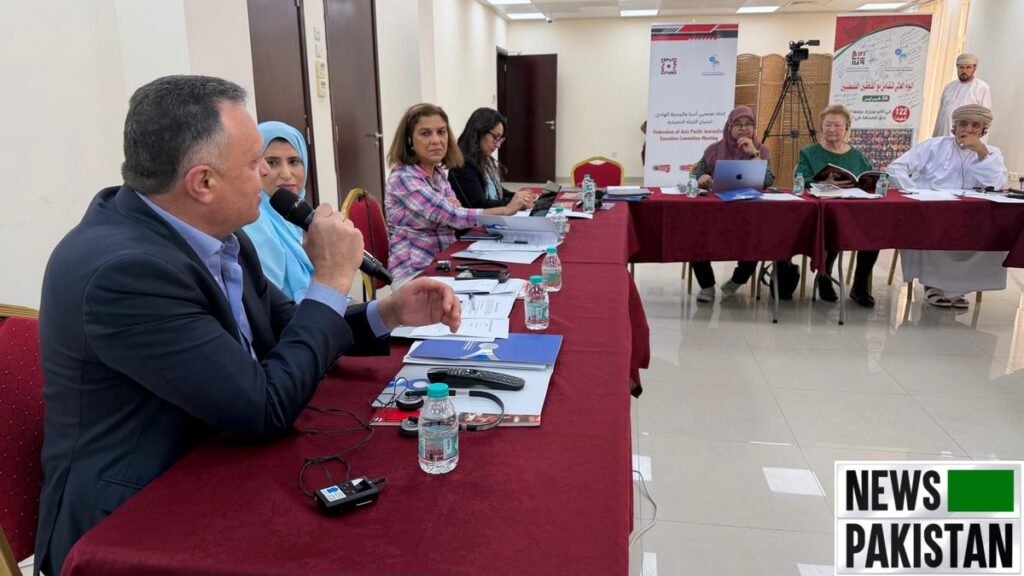
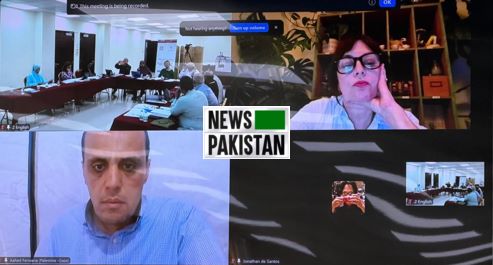
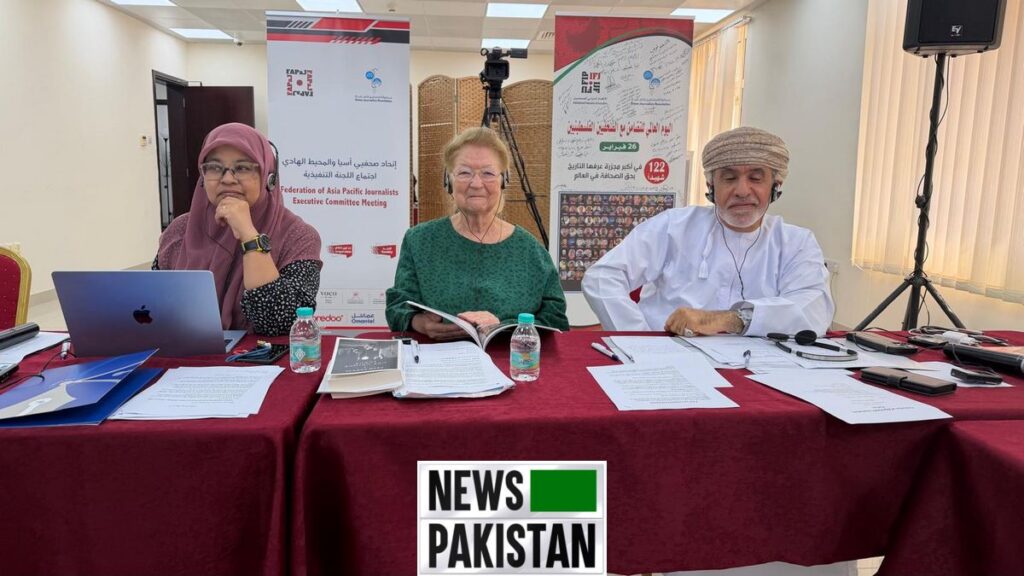
MUSCAT: Meeting of the Executive Committee of the FAPaJ is being held here (16th to 22nd April, 2026) with the IFJ Administrative Committee and Secretary General.
__________
The Federation of Asia Pacific Journalists (FAPaJ) was formed on 31st of May, 2022, during the IFJ’s Triennial World Congress held in Muscat.
In October & November 2025, FAPaJ held its second Congress and formed a new Executive Comittee, electing Indonesia’s Nany Afrida as President, and re-electing Oman’s Salim Al Jahwari as Vice-President.
FAPaJ Executive Committee (2025-2028): President: Nany Afrida – Aliansi Jurnalis Independen (AJI) Indonesia; Vice-President: Salim Al Jahwari – Oman Journalists Association (OJA).
FAPaJ Executive Committee Members:
GM Jamali – Pakistan Federal Union of Journalists (PFUJ), Sabina Inderjit – Indian Journalists Union (IJU), Ahed Farwana – Palestinian Journalists Syndicate (PJS), Kasun Ubayasiri – Media, Entertainment and Arts Alliance (MEAA), Jonathan de Santos – National Union of Journalists of the Philippines (NUJP), Reem Al Breiki – UAE Journalists Association (JA – UAE), Rasha Alebrahim – Bahraini Journalists Association (BJA).
The FAPaJ became the fourth IFJ regional group after the European Federation of Journalists (EFJ), the Federation of African Journalists (FAJ) and the Federación de Periodistas de América Latina y el Caribe (FEPALC).
FAPaJ comprises representatives from five sub-regions of the Asia-Pacific: Pacific, Western Asia, Eastern Asia, Southern Asia and Central Asia.
Anthony Bellanger, Secretary General, IFJ, had congratulated renowned Pakistani Journalist & Media-Rights Activist G. M. Jamali on being elected as Member At Large (FAPaJ), International Federation of Journalists, 14th October, 2025.
Election of G.M. Jamali as Member At Large (FAPaJ), IFJ, is an honour for the country and the achievement is being hailed by the Media community of Pakistan. As a trade unionist he had actively advocated for the rights of Media Workers, and for the Right of Speech and Freedom of Expression.
Immediate Past President of Pakistan Federal Union of Journalists, G. M. Jamali has served twice as PFUJ President and as the Secretary General. He is in the field for a quarter century during which he had worked for the mainstream publications and channels of Pakistan.
Being elected as the Member At Large (FAPaJ) International Federation of Journalists (IFJ), G.M. Jamali will be able to raise his voice for the journalists of 42 countries of Asia Pacific. Brussels based, International Federation of Journalists (IFJ) represents six hundred thousand (600,000) journalists in about 150 countries.
__________
Working Program:
The 2025–2028 working program of the Federation of Asia-Pacific Journalists (FAPaJ) should focus on strengthening solidarity among journalists and their unions across Asia and the Pacific, in line with the principles of the International Federation of Journalists (IFJ). At a time when press freedom is under pressure, unity is essential. Stronger connections between unions will help journalists support one another, share experiences, and respond collectively to threats against their rights, safety, and working conditions.
At the same time, this solidarity is crucial to face the wider crisis in the media sector. Economic challenges, the rapid rise of AI, and increasing risks to journalists are reshaping the profession. By working together with like-minded organizations, FAPaJ can promote decent work, ethical journalism, and stronger protection for journalists. Through collective action and mutual support, journalists across the region can build a more resilient, safe, and independent future for journalism.
The FAPaJ shall adopt the following priorities to meet the growing challenges at local, regional and global levels:
UNION ORGANISING
- To organise and lead strong, free and independent trade unions of journalists which campaign for press freedom and social justice.
- To campaign for the fundamental rights to form trade unions and to collectively bargain for fair pay, decent work and their fundamental labour rights.
- To engage with the global labour movement to defend journalists’ rights and all trade union rights as guaranteed by the Conventions of the International Labour Organisation (ILO);
- To encourage and support the capacity building of FAPaJ member unions to become stronger, more diverse representative organisations actively working with members to negotiate and build power at work;
- To focus on the rising levels of precarious work and give greater priority for the needs of freelance and contract media workers who remain open to exploitation, particularly young media workers and those working in digital media.
DEFENDING DEMOCRACY
- To work closely with the International Trade Union Confederation (ITUC) and other media, information and creative trade unions for the promotion of press freedom as a fundamental pillar of democratic societies;
- To actively engage and campaign to protect the professional rights and freedoms of all journalists and their unions to fight against the imposition of draconian laws aimed at curbing media freedom and freedom of expression;
- To encourage and promote independent, public-interest journalism and mobilise democratic support for independent media;
- To expose and challenge attempts by governments and corporates to monopolise media ownership and resist propaganda and the politicisation the media.
JOURNALIST SAFETY
- To prioritise advocacy for a binding international convention on the safety and independence of journalists and other media professionals, as drafted by the IFJ and intensify lobbying efforts with national governments to secure its adoption at the United Nations.
- To mobilise campaigns and strategies targeting the increasing challenges and safety threats to journalists in the digital realm, including online harassment, disinformation and state-sponsored surveillance;
- To co-ordinate action for the safety of journalists and to encourage the incorporation of safety training in collective agreements between unions and employers;
- To speak out as a united global voice against violence, in defence of peace and press freedom and lobby governments against impunity for crimes against journalists;
- To drive regional campaigns to encourage stronger solidarity and cooperation among FAPaJ members to strengthen unity to defend press freedom and improve the safety of the working environment of journalists and media workers.
MEDIA PROFESSIONALISM AND SUSTAINABILITY
- To drive solidarity among FAPaJ member unions to mobilise their members in support of each other in defence of economic, social and professional rights;
- To encourage members and develop strategies for capacity building programs to support stronger, more professional journalists and a viable, sustainable media into the future.
- To advocate for stronger industry safeguards against creative theft of journalists work by AI and promote stronger collaboration among member unions to share knowledge, resources and best practices to counter disinformation.
GENDER EQUALITY AND DIVERSITY
- To strive to achieve representative leadership, equitable member outcomes, and inclusive workplace practices by embedding diversity, equality, and inclusion in union governance, bargaining, and organising activities;
- To campaign against racism and xenophobia and motivate member unions to develop policies and working practices to improve gender equality and diversity;
- To actively encourage and promote encourage gender equality and diversity as a fundamental tenant of trade unionism and building union power for all;
- To work with IFJ Gender Council to actively challenge all discrimination and guarantee the full integration of women in trade unions at all levels.
- REGIONAL AND GLOBAL SOLIDARITY
- To develop tools and resources to enable member unions to take a more active role in global actions and campaigns including those led by IFJ and other regional federations;
- To increase collaboration work with the wider trade union movement at global and regional levels, and building new alliances and co-operation with other Federations and organisations to address challenges to the world of work;
- To support the mobilisation of member unions to join campaigns with the ITUC and ILO to promote ratification and effective implementation of international labour standards;
- To aid the IFJ campaign, alongside UNI, to defend and promote public service values in broadcasting and among national news agencies based on editorial independence, quality journalism, fair resourcing and democratic and accountable systems of administration.
MOTIONS PASSED AT THE TRIENNIAL CONGRESS (PART 2) – NOVEMBER 2025
SAFETY OF JOURNALISTS:
- Supports a UN convention on the safety of journalists.
Proposed by Federation of Media Employees Trade Unions (FMETU)
The Triennial Congress of the Federation of Asia-Pacific Journalists notes with grave concern the continuing violence and impunity against journalists and media workers worldwide. It reaffirms its unwavering support for a binding international convention on the safety and independence of journalists and other media professionals, as drafted by the International Federation of Journalists (IFJ).
The Triennial Congress of the Federation of Asia-Pacific Journalists instruct the executive committee to continue to prioritise advocacy for this convention and calls on all member unions to intensify their lobbying efforts with their national governments to secure its adoption at the United Nations.
- Digital safety of journalists
Proposed by Federation of Media Employees Trade Unions (FMETU)
The Triennial Congress of the Federation of Asia-Pacific Journalists recognises the increasing and evolving threats faced by journalists in the digital realm; including online harassment, disinformation campaigns and state-sponsored surveillance.
The Triennial Congress of the Federation of Asia-Pacific Journalists believes that the IFJ must lead the international trade union movement in protecting journalists’ digital properties to establish a Digital Safety Watchdog or similar body.
- Combating Digital Harassment of Journalists
Proposed by National Union of Journalists (India) [NUJ-I]
FAPaJ shall discuss the prospect of developing a region-wide policy to protect journalists from online harassment, threats, and disinformation campaigns, including access to legal aid, digital security training, and mental health support.
- Impunity for crimes against journalists in Asia-Pacific
Proposed by Media & Creative Industry Workers Union for Democracy (SINDIKASI)
Motions: Congress resolves to urge the governments in the Asia-Pacific to:
- Stop attacking journalists and media workers both through physical harassment, intimidation, legal assault, and other means.
- Stop impunity against the perpetrators of press freedom. Brought them into an accountable and fair trial.
- Stop weakening media censorship through controlling the flow of advertisements and threatening companies that publish advertisements deemed critical to the government.
- On red-tagging and the vilification of journalists
Proposed by National Union of Journalists of the Philippines (NUJP)
The Triennial Congress of the Federation of Asia-Pacific Journalists:
Recognises the use by the Philippine government and its surrogates of the tactic of “red-tagging” or accusing journalists of membership or support for the Communist Party of the Philippines – New People’s Army – National Democratic Front.
Acknowledges that such a practice puts journalists at risk of harassment, surveillance, and arrest and produces a chilling effect on reporting critical of the government and its policies.
Considers that the tactic has been used against its affiliate National Union of Journalists of the Philippines, its leadership, and its members
Recognises that NUJP and its members have documented cases of red-tagging of journalists, launched a campaign against it and have participated in a national inquiry on it by the Philippines’ Commission on Human Rights.
Recognises further that similar tactics can and have been used against journalists in other countries and jurisdictions
In keeping with the International Federation of Journalists’ objective “to respect and defend freedom of information, media freedom and the independence of journalism, particularly through research and monitoring of violations and taking action to defend journalists and their work”,
The Triennial Congress resolves to:
a. Condemn the practice of “red-tagging” and similar attempts to vilify and portray journalists as combatants in armed conflicts
b. Set up mechanisms for solidarity and support for journalists facing such practices
c. Declare that the Federation of Asia-Pacific Journalists will monitor cases of “red-tagging” and similar practices and continue to call for an end to the labelling and vilification of media workers.
- On jailed community journalist Frenchie Mae Cumpio
Proposed by National Union of Journalists of the Philippines (NUJP)
The Triennial Congress of the Federation of Asia-Pacific Journalists;
Notes the use by the Philippine government of anti-terrorism laws to intimidate and silence journalists, rights defenders and activists,
Recognises the International Federation of Journalists’ consistent and continued support for Filipino community journalist Frenchie Mae Cumpio, who has been in government custody and facing trumped-up cases of possession of explosives and firearms and terrorist financing since 2020,
Acknowledges that the media community in the Philippines recognises Cumpio as a journalist and a colleague,
Takes into consideration calls for Cumpio’s release made by United Nations Special Rapporteur Irene Khan and by press freedom groups, including Reporters Without Borders, the Committee to Protect Journalists and Free Press Unlimited
And acts in accordance with the IFJ’s objectives “to protect and strengthen the rights and freedoms of journalists” and to “promote the social role of journalists and the profession of journalism, particularly its contribution to democracy and freedom”,
The Triennial Congress resolves to:
a. Issue a statement calling for the dismissal of the cases and for Cumpio’s release
b. Send copies of the statement to Philippine President Ferdinand Marcos Jr., the Presidential Task Force on Media Security, and the Department of Justice
c. Join affiliates to support the campaign for Cumpio’s release
JOURNALIST WELFARE & MEDIA SUSTAINABILITY:
- Enhancing the capacity and sustainability of journalists and media workers
Proposed by Media & Creative Industry Workers Union for Democracy (SINDIKASI)
The Congress urges the executive committee of FAPaJ to:
Enhance the capacity of journalists and media workers to protect and defend against threats in their world of work.
Strengthen the capacity of the media economy by encouraging sustainable operations in the digital era to bring prosperity to journalists and media workers and improve the quality of journalistic works against the authoritarian government.
Encourage solidarity and cooperation among FAPaJ members to strengthen unity in defending press freedom and improve the safety of the working environment of journalists and media workers.
- Crisis of Indonesian Journalists’ Welfare and Industrial Relations
Proposed by Aliansi Jurnalis Independen (AJI)
Considering that the industrial relations situation in the Indonesian media sector is currently in a serious crisis, marked by the mass dismissal of over 1,000 journalists since early 2025 across national and regional media companies such as those in Semarang, Bengkulu, and Batam.
Acknowledging that these dismissals have often been carried out without fair and transparent procedures, resulting in violations of workers’ normative rights, including unpaid severance, delayed or reduced salaries, and the absence of social and health security guarantees. This situation risks creating a chilling effect where journalists feel reluctant to perform their watchdog role over media owners, advertisers, and economic and political powers.
Recognising that journalists face increasing workloads while their salaries stagnate or decline, many working under contract terms that are unjustly renewed, reducing their rights, with payment systems often below regional minimum wages and lacking adequate social protections;
Believing that this crisis not only harms media workers but also deprives the wider public of their right to accurate, balanced, and independent information as a cornerstone of democracy;
Acknowledging Aliansi Jurnalis Independen (AJI) Indonesia’s ongoing commitment to fighting for journalists’ welfare as the foundation for sustainable media professionalism;
This motion declares:
- Calling on all stakeholders—including media owners, press companies, government bodies such as the Ministry of Manpower and regional labour offices, labour unions, and professional organisations—to urgently develop and implement comprehensive and equitable protections for media workers. Such protections must include fair and transparent dismissal procedures, full fulfilment of normative rights such as severance pay, access to health and occupational safety benefits, and old-age security for journalists. Furthermore, this calls for the establishment of sectoral wage standards and strict respect for employment status in accordance with existing laws and regulations.
- Inviting the international press community and the International Federation of Journalists (IFJ) to extend solidarity and support to Indonesian journalists in strengthening the establishment and empowerment of media labour unions at the company and regional levels. IFJ and international partners are urged to promote effective enforcement of international labour laws within the national and regional media sectors to ensure journalists’ welfare and professionalism, which are indispensable foundations for democracy and press freedom in Indonesia.
FREEDOM OF EXPRESSION & DEMOCRACY:
- Freedom of speech & expression
Proposed by Pakistan Federal Union of Journalists (PFUJ)
Governments in the Asian sub-continent have been introducing draconian laws to curb the freedom of the media, limiting freedom of speech & expression. With limited freedom, media workers have to face immense pressure and personal security risks while performing duties. Protection of Electronic Crime Act (PECA) in Pakistan and similar laws in the Maldives and Sri Lanka have been a great threat to working journalists.
This FAPaJ congress strongly condemns such legislation and demands that governments amend such laws in consultation with the stakeholders to make them acceptable and comprehensive.
- Safeguarding Democracy from Corporate Capture and ‘Lapdog Media’
Proposed by Indian Journalists Union (IJU)
Recognising that in many countries across the Asia-Pacific region, ruling parties or coalitions increasingly engage in crony capitalism, aligning with big businesses and powerful corporations in ways that weaken democratic institutions.
Noting with concern that this nexus of money and power has led to the takeover or control of major and influential media outlets, as seen in India with the case of NDTV, thereby concentrating information flows in the hands of governments and corporate houses, alarmed that such government and corporate-controlled outlets dominate the mainstream media space, creating monopolies of information that distort facts, undermine independent journalism and erode democracy.
Observing that in India the term “Godi Media” (literally, “lap media” or ‘lapdog media’) has emerged to describe such outlets that act as echo chambers of authoritarian political narratives, dividing societies along religious, ethnic and other lines to maintain political power.
Condemning the use of media capture as a tool to mislead citizens, manufacture consent, and weaken the democratic process under the guise of democracy,
Affirming that independent media and journalism are vital to democracy, pluralism and people’s right to credible information,
The FAPaJ commits itself to initiating a campaign against “lapdog media” and their dissemination of power-driven narratives, and to uphold the independence of journalism across the region.
The Congress, therefore, directs the FAPaJ Executive Council to:
- Encourage and promote independent, public-interest journalism that is free from political and corporate influence.
- Mobilise democratic support for independent media outlets from citizens, civil society, and professional associations.
- Expose and challenge attempts by governments and corporates to monopolise media ownership and narrative-building.
- Strengthen solidarity among member unions to resist media capture and support journalists working in independent spaces.
- Advocate globally for safeguards against monopolistic media practices that harm democracy.
By adopting this motion, FAPaJ reaffirms its stand that a free, diverse and independent media is indispensable to democracy and pledges its commitment to resist the creeping rise of autocracy disguised as democracy.
MEDIA ADVOCACY:
Strengthening Press Freedom through Legal Advocacy
Proposed by National Union of Journalists (India) [NUJ-I]
FAPaJ shall advocate for stronger legal protections for journalists, including guidelines for press freedom, legal assistance for harassment or unlawful detention cases, and engagement with governments to safeguard journalistic rights.
- Advocacy against conflict and violence globally
Proposed by Sri Lanka Working Journalists Association (SLWJA)
FAPaJ congress notes that the IFJ is the first organisation of journalists to publish an annual list of journalists killed since 1990 – in total 3047 in 34 years. In the most recent list for the year 2024, the biggest number of journalists and media workers killed were in the Middle East (77, including 64 in Palestine, six in Lebanon, three in Iraq and four in Syria), followed by 20 in the Asia-Pacific region (six in Pakistan, five in Bangladesh, three in India, three in Myanmar, one in Indonesia, one in the Philippines and one in Kazakhstan), followed by six in the Americas (five Mexican and one Colombian) and four in Europe (Ukraine).
Congress further notes that, every year, a large number of journalists are killed or wounded in armed conflicts.
FAPaJ should:
- Condemn the outbreak of war at its earliest stages, regardless of geography or political context.
- Speak out as a united global voice against violence, in defence of peace and press freedom.
- Lead and support international campaigns, in cooperation with other global organisations, to stop war before it spreads and puts more journalists and civilians at risk.
Congress in particular condemns the genocidal war waged by the Israeli army on Palestinians in Gaza which, since October 7th, 2023, has resulted in at least 223 journalists killed according to the IFJ, making Gaza one of the most dangerous places in the history of modern journalism.
The majority of journalists who have lost their lives were killed along with their families in targeted attacks in their homes or places of refuge. Many more have been injured, over 30 arrested (some severely tortured), and 86 media institutions and offices have been destroyed. Israel has severely restricted access to Gaza for international media outlets, leaving local journalists as the only ones capable of documenting what is happening.
FAPaJ congress regrets that more should have been done by its previous leadership to help Palestinian journalists confront one of the worst chapters in their history. It instructs the new leadership to launch an urgent campaign throughout the region for affiliates to contribute to the solidarity effort, as some like MEAA have done, to help Gazan journalists with the essential equipment they need to do their job as well as medical and safety equipment, and most importantly now the reconstruction effort.
- FAPaJ financial support
Proposed by Pakistan Federal Union of Journalists (PFUJ)
FAPaJ has been part and parcel of the IFJ, representing a great number of countries in the Asia Pacific region, but there is no financial support or any devised method of earning for the FAPaJ to perform any activities. As the members have already been paying an annual subscription to the IFJ, so it looks inappropriate to ask member unions to pay additional annual fees to FAPaJ as well. The FAPaJ congress sends a request to the IFJ for further assistance while the FAPaJ executive committee make efforts for fundraising to run its activities as per the constitution.
- Combating Misinformation and Disinformation in the Age of Artificial Intelligence
Proposed by Indian Journalists Union (IJU)
Recognising that Artificial Intelligence (AI) has become a transformative force impacting every sphere of life, society and democracy, enhancing creativity, productivity, and transparency when used ethically,
Alarmed that AI technologies are increasingly being misused by vested interests – including corporations, big businesses, political actors, criminals and corrupt politicians – to manipulate public opinion, spread misinformation and disinformation, reap undue profit and grab political power, thereby undermining democratic processes,
Noting that the spread of falsehoods through AI-driven platforms has dangerously misled people, polarised societies and derailed democratic functioning, posing grave challenges to free expression, informed debate and public trust,
Affirming that journalists have a solemn duty to disseminate facts and credible information, expose suppliers of misinformation and disinformation, and strengthen public faith in democratic institutions,
Appreciating the role of fact-checking initiatives and the responsible use of AI tools by journalists in countering false narratives and ensuring accuracy in reporting,
The FAPaJ commits itself to encourage, explore and expand the use of AI-powered tools for fact-checking and combating misinformation and disinformation across the Asia-Pacific region.
The Congress, therefore, directs the FAPaJ Executive Council to:
- Facilitate training and capacity-building programmes for journalists, especially the younger generation, in the ethical and professional use of AI for journalistic work.
- Promote collaboration among member unions to share knowledge, resources and best practices in using AI to counter disinformation campaigns.
- Advocate for strong safeguards against misuse of AI by political or commercial interests, while upholding press freedom and democratic values.
- Lead awareness campaigns highlighting the dangers of AI-driven disinformation and the critical role of independent journalism in preserving truth and democracy.
- By adopting this motion, FAPaJ reaffirms its responsibility to defend democracy, protect citizens’ right to accurate information, and inspire new generations of journalists to harness technology in the service of truth and accountability.
URGENT MOTIONS
- Timely and Fair Elections for Nepal and respect for the media
Proposed by the Federation of Nepali Journalists (FNJ)
The FAPaJ Congress notes that Nepal’s press freedom and journalist safety is facing unprecedented challenges amid the country’s current political instability, while also confronting restrictive legislation and increased violence against media professionals.
It notes the tragic deaths of journalists Suresh Bhul and Suresh Rajak during pro-monarchy protests on March 28, 2025, and police brutality against journalists during the September 2025 Gen Z demonstrations, which highlighted the grave physical dangers journalists face when covering political unrest in Nepal;
FAPaJ also remains deeply concerned by the intentional targeted attacks on media houses during the 2025 Gen Z political protests;
It strongly recognises that Nepal’s democratic elections scheduled for March 5, 2026, requires a free, independent press capable of conducting investigative journalism and holding power to account without fear of reprisal;
The FAPaJ Congress:
Urges the Nepal Police and security forces to:
- Stop targeting journalists covering legitimate news events and political demonstrations;
- Provide security and protection to journalists covering high-risk assignments;
- Establish clear protocols protecting journalists’ right to report without obstruction;
- Investigate and prosecute perpetrators of attacks on journalists, particularly those targeting women journalists and marginalized community reporters.
Urges IFJ and affiliated organizations to:
- Document and publicise all incidents of press freedom violations to international bodies and media freedom organizations;
- Strengthen solidarity networks among regional journalist unions to support Nepali colleagues.
Urges the current interim government of Nepal to:
- Conduct the March 5, 2026 elections on schedule;
- Guarantee full freedom of expression and media freedom throughout the electoral process;
- Ensure that all political parties and candidates have equitable access to media coverage and public communication platforms;
- Refrain from using state resources or government media to favor any political party or candidate;
- Allow journalists unrestricted access to electoral processes, rallies, and political events.
The FAPaJ calls on all stakeholders to ensure that the electoral period strengthens rather than undermines press freedom as a cornerstone of democratic accountability.
- The Need For Reconstitution And Functioning Of The Press Council Of India
Proposed by the Indian Journalists Union (IJU)
The Federation of Asia Pacific Journalists (FAPaJ),
- Noting with grave concern that India, the world’s largest democracy, has been without a functioning media monitoring and self-regulatory body — the Press Council of India (PCI) — for more than one year, in clear violation of the statutory mandate of the Press Council Act, which requires reconstitution of the Council every three years and regular meetings at least once every three months;
- Recognising that the continued non-functioning of the PCI has left Indian journalists without an institutional forum for protection, redressal, and ethical self-regulation at a time when press freedom in India faces unprecedented threats;
- Observing that India’s position in the global Press Freedom Index has been declining year after year, reflecting a deteriorating environment marked by harassment, intimidation, and violence against journalists, including murders, arrests under draconian laws, trolling, and physical assaults;
- Alarmed that the persistent fear of retaliation has created a climate of self-censorship, further deepened by corporate consolidation and the dominance of media houses aligned with the political establishment, resulting in the suppression of dissenting voices and distortion of public discourse;
- Concerned that despite ongoing court proceedings, there is no judicial stay on the reconstitution of the PCI, and legal precedents clearly establish that the Council may be reconstituted even when related matters are pending before courts;
- Emphasising that the absence of the PCI has severely weakened mechanisms of accountability and ethics in journalism, undermining both public trust and the democratic role of the press in India;
Therefore, this Congress:
1. Urges the Government of India and the Chairperson of the Press Council of India to immediately initiate the process of reconstituting the Council in accordance with the provisions of the PCI Act, without waiting for judicial outcomes that may take years.
2. Calls upon the Government to ensure that the reconstituted PCI is independent, transparent, and inclusive, representing all sections of the media and upholding the freedom, rights, and dignity of working journalists.
3. Expresses solidarity with Indian journalists who continue to report fearlessly despite increasing threats, pressures, and censorship, and reaffirms FAPaJ’s commitment to defend press freedom in India and across the Asia-Pacific region.
4. Requests FAPaJ to convey this resolution to the Government of India, the Press Council of India, and the International Federation of Journalists (IFJ), urging collective advocacy for the immediate restoration of a functioning media regulatory body in India.
Constitution:
SECTION 1. TITLE AND HEADQUARTERS
1.1. The Federation shall be known as: the “Federation of Asia-Pacific Journalists (FAPaJ)”.
1.2. The headquarters of FAPaJ are located in Sydney (IFJ Asia Pacific office). It can only be transferred to another location by decision of its triennial Congress.
SECTION 2. MEMBERSHIP
2.1. All member unions affiliated to the International Federation of Journalists (IFJ) in the Asia and Pacific continents shall automatically become members of FAPaJ. No member union is allowed to be a member of the Federation of Asia-Pacific Journalists without being a member of the International Federation of Journalists.
2.2. The IFJ secretariat should inform and share details of the member union given affiliation with the Executive Council of the FAPaJ.
2.3. Except as specified by this Constitution, associate members may participate in all FAPaJ activities. They may be represented at Triennial Congress by one delegate but shall not have the right to vote, to nominate or to be nominated for office. With the assistance of the Federation, associate members shall do all in their power to attain and conform with the conditions of full membership and shall, when appropriate, seek full membership.
SECTION 3. CHARACTER, AIMS AND OBJECTIVES
Character
3.1. FAPaJ is the regional organisation of the International Federation of Journalists (IFJ) and shall operate within the framework of the IFJ constitution to uphold its aims and principles in representing the interests of affiliated journalists’ unions and their members in the Asia and Pacific continents.
3.2. FAPaJ is open to affiliation by democratic, independent, and representative trade unions. Its rules are to guarantee internal democracy, full participation, and the composition of its governing bodies and its representation reflects its pluralist character.
3.3. Its decisions are taken, and its activities implemented, in full independence of all external influence, be they state, political, employer, religious, economic, or other. It shall work to enforce trade union and professional matters and to protect and defend freedom of expression and information as well as journalists’ rights, in line with ILO standards, conventions and protocols.
3.4. FAPaJ shall promote understanding and solidarity among unions affiliated to the International Federation of Journalists.
3.5. In striving to being inclusive, FAPaJ shall promote women’s rights and gender equality, and guarantee the full integration of women in trade unions at all levels; it shall combat racism, xenophobia and exclusion and work for tolerance, equality and dialogue between different cultures; it shall ensure the full integration of young people, support their access to training and to decent work.
Objects
3.6. Among the aims and objectives of the Federation are to:
(a) protect and strengthen the rights and freedoms of all journalists and journalists’ unions and associations in the Asia and Pacific continents;
(b) defend and promote trade union principles and organisation;
(c) promote and defend freedom of information, media freedom and pluralism and independence of journalism, particularly through research and monitoring of violations and taking action to defend journalists and their work;
(d) uphold and improve professionalism and to promote high standards of journalism, ethics of journalism, and journalistic education;
(e) improve and defend the social and working conditions of all journalists, employed and freelance, and to encourage and support member unions and associations in collective bargaining and to strengthen their role as a collective organisation representative of journalists at the workplace;
(f) promote co-operation between member unions and associations, and to support trade union development;
(g) promote and maintain editorial democracy;
(h) promote the social role of journalists and the profession of journalism, particularly its contribution to democracy and freedom;
(i) encourage the provision of professional and trade union education and training for journalists;
(j) co-ordinate action to ensure the safety of journalists and to incorporate safety training in collective agreements between member unions and associations and employers organisations;
(k) work closely with the ETUC and other trade unions in the field of media, information and for the promotion of press freedom;
(l) establish and maintain close relations with relevant international, government and non-government organisations in pursuit of these objects;
(m) act to end all discrimination on the basis of sex, religion, colour, nationality, ethnicity, sexual orientation, gender identity, political opinion, social origin, age or disability, and to uphold respect for diversity in society and employment.
Tasks
3.7. FAPaJ shall elaborate a working programme in line with IFJ policies and principles. According to the working programme adopted by its Triennial Congress, the Executive Council shall determine priorities of work in representing and working for journalists’ and their unions’ interests in the Asia and Pacific continents.
3.8. Decisions of the Triennial Congress of FAPaJ shall be reported to the IFJ Executive Committee and the IFJ Congress.
3.9. FAPaJ shall work closely with other trade unions representing groups of workers in the media and will co-operate in working out general principles and guidelines for common trade union policy in the field of mass media and information.
3.10. FAPaJ shall promote and organise campaigns, solidarity activities, days of action, and other mobilisations considered necessary to advance the rights and freedoms of its members and to ensure the timely and effective provision of solidarity.
The Federation shall pursue the tasks above in accordance with the trade union values of solidarity, democracy and justice.
SECTION 4. MAIN BODIES OF FAPaJ
4.1. The Triennial Congress is the supreme legislative body of the Federation of Asia-Pacific Journalists.
4.2. The Executive Council is the decision-making body of FAPaJ elected at Congress, with powers to act for the Federation between congresses. It shall meet at least once a year and shall establish Standing Orders for its meetings and fix a quorum.
4.3. The Management Committee decides measures to implement policies adopted by the Executive Council.
4.4. Commissions and Committees shall advise and assist the Management Committee in fulfilling its duties. Their duties, composition and function are defined by the Executive Council.
4.5. The Secretariat is the administrative body managing the FAPaJ’s day-to-day activities under the supervision of the Management Committee.
SECTION 5. TRIENNIAL CONGRESS
5.1. The Triennial Congress of the Federation of Asia-Pacific Journalists shall normally meet every third year in advance of the IFJ Congress. It shall be composed of one delegate from each member union and the members of the Executive Council. The IFJ President, General Secretary and Executive Committee members elected from the Asia-Pacific region shall have the right to participate without the right to vote. Each member union has the right to send observers at their own expense. Observers from continental trade union movements and other organisations may be invited.
The Executive Council may convene an extraordinary Congress at any time if three fourths of the members vote in favour, or if half of the member unions make such a demand in writing.
5.2. The voting system at the Congress shall be the same as the voting system at the IFJ Congress. Member unions, that have not paid their membership fee according to provisions, shall not have the right to vote or to submit candidates for any elected position.
5.3. The Executive Council will prepare the agenda of Congress and decide on voting rights in line with the current rules. The invitations and draft agenda have to be sent to member unions at least three months before the Triennial Congress.
5.4. Congress has its own working rules. A report on decisions of Congress will be prepared immediately and sent to member unions. The minutes will be confirmed by the Executive Council and shall be kept on record in the secretariat.
5.5. The working languages of Congress shall be English and Arabic.
5.6. Congress shall:
a) elect
- a Presidium to chair Congress;
- a motions’ commission to consider the motions and urgent motions;
- an electoral commission;
Each of these bodies shall comprise three members who shall not be members of the Executive Council nor candidates for the next Executive Council.
b) shall also elect
- the President and Vice-President;
- members of the Executive Council;
- reserves for the Executive Council.
c) confirm the agenda, changes of the working rules proposed by the Executive Council and the voting rights of the unions;
d) approve the minutes of the last Congress;
e) decide on membership of unions failing to meet their financial obligations and decide on membership fees;
f) approve the report of the Executive Council, which will be presented by the President;
g) consider the reports of commissions and working groups;
h) consider financial reports, including the audited accounts and adopt a budget plan for the following years presented by the honorary treasurer;
i) consider the reports on activities in the region presented by the secretariat and by the IFJ regional Office;
j) receive the reports of the sub-regional groups;
k) decide on motions setting out policy and activities of the IFJ in the Asia-Pacific region. Member unions with voting rights and the Executive Council have the right to submit motions. A maximum of two motions from member unions must be submitted to the Executive Council at least one month before Congress and shall be sent to member unions at least two weeks before Congress;
l) decide on motions for changes to the Constitution of the Federation. These motions must be submitted to the Executive Council at least three months before Congress and shall be sent to member unions at least two months before Congress. To be adopted they must be accepted by at least two-thirds of the voting delegates present. New rules shall be promulgated by the Executive Council no later than three months after Congress.
m) decide on the admission of urgent motions. Urgent motions can be presented until 48 hours before the start of Congress and shall only be accepted if they deal with grave and urgent matters and require immediate action which only Congress can authorise.
n) adopt the working programme of the IFJ in the Asia-Pacific region.
5.7. Member unions willing to host a Congress must submit their bid including information on transport, facilities, costs, conditions and sponsorship three months in advance of the Executive Council meeting which may decide on the venue.
SECTION 6. THE EXECUTIVE COUNCIL
6.1. The Executive Council is the administration body of FAPaJ responsible for the supervision, coordination and monitoring of the FAJ activities in the Asia-Pacific region. It shall propose a working programme to Congress and shall be responsible for the execution of its decisions.
6.2. The Executive Council has ten members and a mandate of three years as follows:
a) A President and two Vice-Presidents (one male and one female) and Treasurer elected by the whole Congress.
b) Five members elected by union delegates from each of the five sub-regions. These members can only be nominated by unions and elected by delegates from the sub-region in which their union belongs to.
c) Three members at large elected by the whole Congress.
6.3. The Executive Council shall also include two reserve members elected by Congress in the order of votes received. Reserve members shall be invited to attend Executive Council meetings in replacement of members not able to attend.
6.4. Member unions have the right to propose delegates for election to the Executive Council and no union may have more than one national representative. The timetable for election shall be circulated in advance to member unions and the list of candidates shall close one month before Congress and sent out to member unions three weeks before Congress. It can be reopened again at the opening of Congress by majority vote on request of member unions. All candidates must have a written mandate from their home union which commits to pay the expenses connected to their tenure of office.
6.5. Members of the Executive Council and the reserves shall be elected by secret ballot. These elections will be organised by the electoral commission.
6.6. The Executive Council shall meet at least once a year. Such meetings shall be called and presided over by the President. At its first meeting it shall establish its Standing Orders including its quorum and elect an honorary treasurer from its members.
6.7. The working language of the Executive Council shall be English and Arabic.
SECTION 7. THE MANAGEMENT COMMITTEE
7.1. The President, Vice-President and Honorary Treasurer form the Management Committee of FAPaJ, which acts for the Federation between meetings of the Executive Council within the policies established by Congress and the Executive Council. Actions of the Management Committee shall be confirmed at the following Executive Council meeting.
7.2. The President is the leading political representative of the Federation and is responsible for the execution of its rules and decisions. He/she convenes the meetings of the Executive Council and chairs them.
7.3. The Vice-President assists the President and replaces him/her when he/she is not available.
7.4. The Honorary Treasurer supervises the financial developments of Federation and reports to the Executive Council and the Triennial Congress.
7.5. The Management Committee is tasked to represent the Federation in legal matters.
SECTION 8. SUB-REGIONAL ORGANISATIONS
8.1. Member unions from Asia and the Pacific continents shall be divided into six (6) sub-regions as follows: Western Asia; Central Asia; Southern Asia; Eastern Asia, Southeast Asia and the Pacific region.
8.2. The Triennial Congress shall determine these sub-regions including their general policies and action.
8.3. Only organisations affiliated with FAPaJ shall be eligible for membership of a sub-regional organisation. When a member union is suspended or expelled by the IFJ at world level, the decision shall also apply at regional and sub-regional level.
8.4. These sub-regional organisations shall establish democratic structures, with elected leaders, and their rules shall be subject to the approval of the Executive Council. They may regulate their own activities provided they are in accordance with the FAPaJ and IFJ constitutions and the priorities and policies of FAPaJ in their respective regions. They shall submit annual reports on their activities to the Executive Council.
8.5. Between Congresses, there shall be meetings of the five sub-regional organisations in accordance with their rules and constitutions, prepared by their elected officials in cooperation with FAPaJ Executive Council at least two months before the meetings.
8.6. The sub-regional organisations shall have power to collect affiliation fees from their member organisations. They shall submit their annual budgets and accounts to FAPaJ for approval by the Executive Council.
SECTION 9. SECRETARIAT
9.1. The Executive Council is responsible for planning the growth of its staff and set out the broad principles that govern the way in which staff are employed including criteria for selection and appointment.
9.2. The number of staff and the diversity of their role will be determined by the needs and activities of the Federation.
9.3. The IFJ Asia-Pacific office director shall participate in the meetings of the Executive Council and Congress, and annual general meetings of the sub-regional groups without voting rights.
SECTION 10. COMMISSIONS, WORKING GROUPS
10.1. The FAPaJ Executive Council shall establish commissions and working groups as are necessary to develop the work of the Federation on issues it considers to be of major priority, to improve the quality of policy and the effectiveness of action.
10.2. Such groups are working advisory bodies of the Executive Council and shall give regular reports to it. The Executive Council shall appoint their members and decide on the aims and objectives of their work.
SECTION 11. RIGHTS AND RESPONSIBILITIES OF MEMBER UNIONS
11.1. Member unions shall have the following rights and responsibilities:
a) Participate in the Triennial Congress within the prescribed timetable;
b) Submit motions to Congress for consideration; propose constitutional amendments; make nomination to the Executive Council, its officers and standing Congress structures;
c) Take advantage of FAPaJ’s developmental activities;
d) Exercise all other rights stated in this constitution and other policies of FAPaJ;
e) Comply fully with this constitution, directives, policies and decisions of FAPaJ;
f) Report regularly to FAPaJ its activities, policies and developments.
SECTION 12. SUSPENSION, WITHDRAWAL AND EXPULSION
12.1. The FAPaJ Executive Council shall have the right to suspend or expel any member organisation for acts considered by the Council to be in breach of this Constitution, or contrary to the principles or objectives herein, or likely to damage the interests of FAPaJ and its member organisations; or following suspension or expulsion by the IFJ.
12.2. Suspended member unions shall automatically lose all the rights linked with their membership and the mandate of its representatives on FAPaJ constitutional bodies shall be rescinded forthwith.
12.3. A decision to suspend or expel a member union may only be made after the Executive Council investigate the circumstances. Such decision should be open to appeal at the next congress.
12.4. Any member organisation may resign from the Federation by giving two months’ notice in writing to the IFJ General Secretary with a copy to the Executive Council.
SECTION 13. FINANCES
13.1. The financial year of FAPaJ shall be from January 1 to December 31.
13.2. Activities in line with the IFJ Asia-Pacific working programme and decisions of Congress may be financed and implemented by the IFJ Project Division.
Finance Commission
13.3. There shall be a Finance Commission consisting of three lay auditors elected at the Triennial Congress. Such Commission shall have authority to review the FAPaJ accounts and must report to the Triennial Congress.
SECTION 14. DISSOLUTION
14.1. The Federation of Asia-Pacific Journalists may be dissolved upon the vote of two-thirds cast by delegates present at Congress, whose unions are in good financial standing. The Congress which voted for dissolution shall also determine the allocation of funds still available to appropriate trade union work within the IFJ.
Section 15. Miscellaneous
15.1. Matters not provided for in this Constitution shall be decided by Congress or, if they arise between congresses, by the Executive Council.
FAPaJ INTERNAL RULES 2026
These rules are a working guideline to the duties and responsibilities of FAPaJ elected leaders and IFJ staff. They are to be agreed by the Executive Council and may be subject to amendment as appropriate by decision of the Executive Council.
The Executive Council
- The Executive Council (EC) is the administration body of Federation of Asia-Pacific Journalists (FAPaJ) is broadly responsible for determining and monitoring the strategic direction of the Federation. It shall, in line with the Constitution of FAPaJ, be responsible for the supervision, coordination and monitoring of the FAPaJ activities in the Asia-Pacific region and otherwise direct the activities of the Federation and its management in between Congresses.
- The EC shall implement the policy decisions as approved by Congress and it shall propose a working program to Congress and shall be responsible for the execution of its decisions.
- Members of the EC are elected to represent the entire Federation and, in accepting election, accept their responsibilities to act on behalf of the Federation as a whole.
- In order to carry out their duties on behalf of FAPaJ, EC members must reasonably be informed about FAPaJ activities and must be able to participate fully in making decisions on behalf of the FAPaJ, and do so in good faith and in the spirit of trade union solidarity.
- Individual EC members shall pay attention to the FAPaJ’s activities and operations and that of their relevant sub-regional federations. In order to fulfill their duties. EC members are required:
- To attend meetings of the EC or, if unable to attend, to ensure adequate time (at least three weeks) for a reserve to be advised;
To make adequate preparation for EC meetings, by reviewing reports and the agenda prior to meetings;
- To consider reports of decisions and recommendations made by the FAPaJ Congress and FAPaJ Management Committee (MC);
- To review regularly the FAPaJ financial policies and to monitor finances and the work of the FAPaJ Treasurer;
- To ensure IFJ and FAPaJ compliance with all its requirement in submitting such financial and other reports as required by law.
Executive Council Members and IFJ Work
- EC shall elaborate a working program in line with IFJ policies and principles. According to the working program adopted by the FAPaJ Triennial Congress, the EC shall determine priorities of work in representing and working for journalists’ and their unions’ interests in the Asia Pacific region.
- Decisions of the Triennial Congress of FAPaJ shall be reported to the EC and the FAPaJ and IFJ Congresses.
- EC shall work closely with other trade unions representing groups of workers in the media and will co-operate in working out general principles and guidelines for common trade union policy in the field of mass media and information.
- EC members may contribute to newsletters and information material as appropriate.
- Information about EC members and their contact details shall be visible on IFJ websites and information material.
- EC shall promote and organise campaigns, solidarity activities, days of action, and other mobilisations considered necessary to advance the rights and freedoms of its members and to ensure the timely and effective provision of solidarity.
In particular, EC will receive information about regional project and sub-regional federation activities. This will be provided through reports from the IFJ secretariat and regional offices and through sub-regional elected leaders – through the MC, which acts as the supervisory body for the EC. The IFJ Secretariat, regional offices and sub-regional federations will ensure a free information flow between with FAPaJ EC members in countries/regions where IFJ project programs are being carried out.
The IFJ secretariat and regional offices will inform EC members concerning the IFJ business in the region or sub-region covering visits, interventions, campaigns, work of affiliates and, importantly, provide progress reports on project activities.
The Main Bodies and Representatives of FAPaJ
The Executive Council (EC) is the decision-making body of FAPaJ elected at Congress, with powers to act for the Federation between congresses. It shall meet at least once a year and shall establish Standing Orders for its meetings and fix a quorum.
The President, Vice-President and Honorary Treasurer form the Management Committee (MC) of FAPaJ, which acts for the Federation between meetings of the EC within the policies established by Congress and the EC. Actions of the Management Committee shall be confirmed at the following EC meetings.
The President is the leading political representative of the Federation and is responsible for the execution of its rules and decisions. He/she convenes the meetings of the EC and chairs them. The Vice-President assists the President and replaces him/her when he/she is not available.
The EC should develop commissions and committees to advise and assist the MC in fulfilling its duties. Their duties, composition and function are defined by the EC.
The Honorary Treasurer supervises the financial developments of Federation and reports to the EC and the Triennial Congress.
The Management Committee is tasked to represent the Federation in legal matters.
Sub-regional EC leaders will represent matters for each of their respective sub-region and ensure adherence to their general policies and action.
Sub-regional EC leaders shall oversee the establishment of sub-regional federations and their democratic structures, with elected leaders, and their rules shall be subject to the approval of the FAPaJ EC.
Sub-regional EC leaders shall submit annual reports on sub-regional federations activities to the EC and MC from sub-regional federations, prepared by their elected officials in cooperation with FAPaJ EC.
Financial Management
The Honorary Treasurer (HT) should be elected from the EC at the Congress or first EC meeting post Congress.
The HT reports to the EC, MC and the Triennial Congress.
The Finance Commission consisting of three lay auditors has authority to review the FAPaJ accounts and reports to the Triennial Congress.
Conflicts of Interest
- EC members should not participate or vote in any process in which they may potentially derive personal or professional benefit.
- EC members exercise their power and authority in the interest of the FAPaJ and not in their own interest or the interest of another entity, particularly one in which they have a formal relationship.
- When acting on behalf of the FAPaJ EC members must put the interests of the FAPaJ above their personal interests. In practice, this means that there should be:
- disclosure of any conflicts of interest;
- avoidance of the use of opportunities provided by the FAPaJ for the individual’s personal gain or benefit;
- non-disclosure of confidential information about the FAPaJ.
- These principles shall also apply to IFJ staff.
- Conflicts of interest are not inherently illegal and are often difficult to monitor given that it is often the case the EC members are affiliated with many different entities in their union work.
- The conflict of interest policy aims to protect the FAPaJ and EC members by establishing a process for disclosure. EC members who may have concerns or require advice in any situation where they are uncertain about their position or the application of policy should seek advice, in confidence, from the IFJ General Secretary, the IFJ Asia-Pacific Regional Director or the President of the FAPaJ.
Disputes and Resolution of Complaints
- All FAPaJ EC members and IFJ staff shall respect each other’s rights and integrity. All sides are committed to creating a safe and secure working environment and any form of discrimination, bullying or harassment will not be tolerated.
- EC members with concerns about the work of the FAPaJ are fully entitled to voice their complaints. All complaints shall be fully investigated and dealt with.
- Where there are specific matters giving rise to complaint about the actions of an EC member this should be made known to the President/IFJ Asia Pacific Regional Director who shall investigate and, if necessary, take action and inform the Management Committee. The FAPaJ President may, as appropriate, seek guidance from the IFJ General Secretary, the IFJ Asia-Pacific Regional Director and/or other senior officers of the IFJ.
Induction of New Executive Council Members
- At the first meeting of the IFJ Executive Council following Congress there shall be a formal induction session for new members.
MEETINGS OF THE FAPaJ EXECUTIVE COUNCIL
- The FAPaJ President and Vice President shall convene all meetings of the Executive Council (EC). Regular meetings of the EC shall take place online and/or in such places as agreed by the EC or the Management Committee (MC).
- The presence of 50% of Executive Council members, plus one, shall form a quorum.
- In the event of an EC meeting not being quorate within 30 minutes of the notified time it shall be adjourned for up to 4 hours after which it shall be abandoned, unless a quorum is present.
- An attendance record will be kept of all EC meetings by the President and Vice President. This record will show the attendance of each session and will be recorded in the Minutes. The three year’s attendance will be published in the General Report presented by the President to the FAPaJ Congress.
- Any EC Member who cannot attend a meeting must notify the President/IFJ Asia-Pacific Regional Director four weeks in advance of the meeting to allow organising attendance of the appropriate reserve
- There shall be a cycle of at least two meetings per year, plus a meeting of the EC immediately before the opening of Congress and after Congress.
- All EC meetings will take place online unless a physical/in-person venue is agreed in advance. Any proposal to hold a meeting cannot be considered unless it is accompanied with a detailed financial budget.
- The FAPaJ President and Vice President, in consultation with the IFJ Asia-Pacific Regional Director, shall prepare the Agenda for each EC meeting. The Agenda shall be circulated to all EC members at least one month before each meeting.
- Minutes of each meeting shall be circulated to every member of the Council one month before being submitted for confirmation at the next meeting. No motion, except in regard to accuracy, shall be allowed on the Minutes. When the Minutes have been confirmed, members may raise matters which arise out of them.
- The MC shall comprise the President, Vice-President and Treasurer and shall supervise all affairs of the Federation in between meetings of the Executive Council. Any action taken shall be confirmed or otherwise at the subsequent meeting of the Executive Council.
- The IFJ Asia-Pacific Regional Director shall be a member of the EC/MC but with non-voting rights.
- All minutes and briefing papers shall be circulated to EC members by e-mail as soon as they are written and finalised by the secretariat.
- Any matter of which ten (10) days’ notice has been given to the President/IFJ Asia-Pacific Regional Director in writing by any member shall be placed on the Agenda of the next EC meeting.
- No matter, other than that appearing on the Agenda shall be discussed at an EC meeting, unless it is a matter of urgency and the EC consents.
- The President, or, in his/her absence, the Vice-President, shall chair meetings of the EC and shall have the authority to keep good order at meetings.
- In the absence of both the President and the Vice-President, the EC shall elect another EC member to chair the meeting.
- The Chair shall rule on all questions of procedure not covered in these Standing Orders. Where there is disagreement a motion “That the Chair’s ruling be not upheld” may be moved and seconded. When this happens, the Chair shall have the right of reply, and the vote shall then be taken without further debate.
- No motion shall be discussed until it has been moved and seconded.
- A member speaking on a motion must direct his/her speech to the question under discussion.
- No member, except the mover of an original motion who shall have a right of reply without the permission of the Chair, shall speak more than once on any motion or amendment, except if it be to ask a question or, at the invitation of the Chair to give an explanation.
- An amendment must be relevant to the motion upon which it is moved.
- Each amendment must be stated before it is moved.
- A member may intervene at any time for the purpose of calling the attention of the Chair to any order or rule which, in his/her opinion, is being contravened; in such cases the discussion shall be suspended until the Chair has ruled.
- Any member who has not spoken in the debate may move “next business.” If this motion is seconded, it shall be put to the vote without debate unless it shall appear to the Chair that such a motion is frivolous and/or an infringement of the rights of the minority.
- Any motion proposed for tabling in the Agenda for Congress on behalf of the EC shall be submitted to the President/IFJ Asia-Pacific Regional Director in writing 40 days prior to the relevant meeting of the EC.
- The Chair may adjourn any meeting for a specified period if in his/her opinion the business of the EC is being impeded by disruptive or unruly behaviour. The Chair may, with the consent of the majority, adjourn any meeting for a specified period.
- Any Standing Order which governs procedure at meetings may be suspended, provided such suspension is supported by at least two thirds of members voting. Suspension shall be for a definite purpose, and the meeting shall automatically revert to normal procedure immediately this purpose has been fulfilled.
- A member of the EC who has a personal financial interest in any matter under consideration shall declare it and such declaration shall be recorded in the Minutes of the proceedings.
VOTING AT MEETINGS
- Voting on all questions shall be by show of hands.
- The Chair shall have only one vote at EC meetings which may be cast either as a deliberative or a casting vote.
- All motions or amendments before the EC shall be decided by a simple majority. In the event of a tied vote the motion or amendment shall be declared “not carried“.
- A resolution of the EC may not be rescinded until the next meeting unless a proposal is put to the EC and the EC agrees that new facts justify reconsideration of the matter immediately.
AMENDMENTS TO STANDING ORDERS
- These Standing Orders may be amended at the second meeting after the Triennial Congress. The text of any amendments to Standing Orders shall be in the hands of the President/IFJ Asia-Pacific Regional Director at least 40 days before that meeting and shall be distributed to members of the EC in advance of the meeting at which they are to be considered.
Newspakistan.tv
M. M. Alam is a Pakistan-based working journalist since 1981. Karachi University faculty gold medalist Alam began his career forty-five years ago by writing for Dawn, Pakistan’s highest circulating English daily. He has worked for region’s leading publications, global aviation periodicals including Rotors (of USA) and vetted New York Times as permanent employee of daily Express Tribune. Alam regularly covers international aviation and defense-related events including Salon Du Bourget (France), Farnborough (United Kingdom), Dubai (UAE). Alam has reported thousands of events and interviewed hundreds of people in Pakistan, UAE, EU, UK and USA. Being Francophone Alam also coordinates with a number of French publications.