KARACHI (NPTV/AFP): Ten citoyens of the Port City lost their lives on Monday (4th May, 2026) when mercury touched over 44°C.
It is pertinent to mention here that karachiites had experienced its hottest day (48°C) in 1938. Interestingly, the temperature underneath a neem tree (Azadirachta Indica) is always ten degrees lesser. For instance, if the temperature is 44°C, it will be 33 degrees Centigrade beneath a neem. One can die of sunstroke if exposed to a temperature like 44°C, but that person cant die in the shade of Azadirachta Indica.
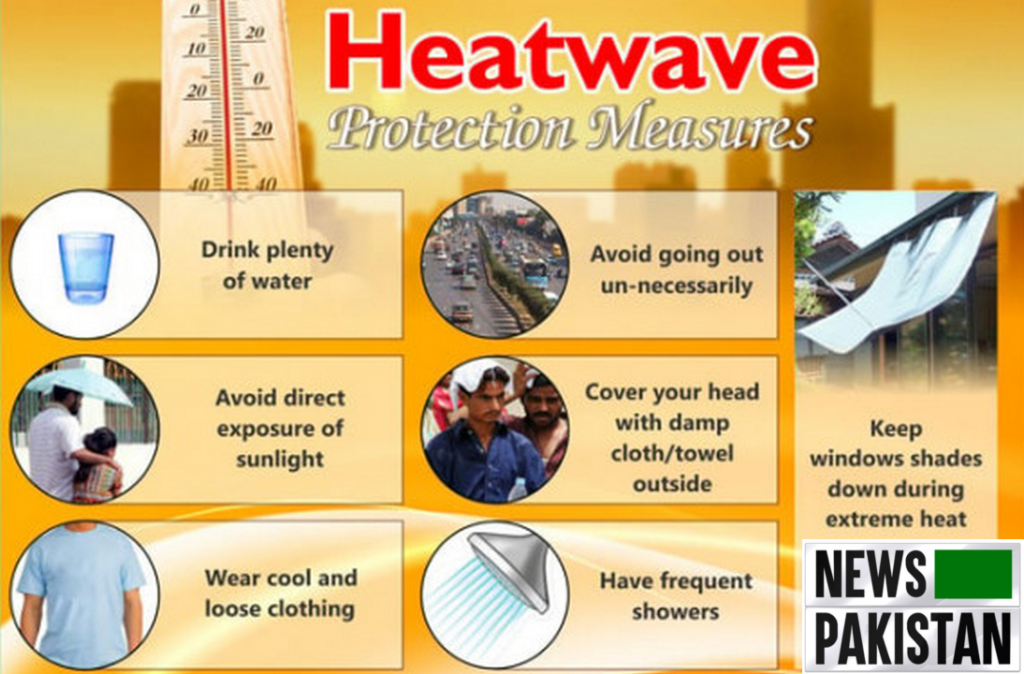
It may be recalled that Pakistanis don’t attempt to save themselves from intense heat even during Hajj. It had been confirmed by the concerned authorities that thirty-five Pakistani pilgrims had lost their lives due to heat related complications during the 2024 Hajj.
Scorching sun had also claimed lives of hundreds of irregular (intended Hajjis) who were too poor to pay the fees to use the facilities (including air-conditioned spaces) available to regular pilgrims. Hence they were not able to benefit from the facilities provided by the host to combat the heat.
Furthermore, augmenting temperature is now a global issue. According to UN over two billion children are expected to be exposed to heatwaves by 2050.
Massive heatwaves across East Asia and the Pacific could place millions of children at risk, the UN warned on 11th April, 2024 calling for action to protect vulnerable people from the soaring temperatures.
Global monitors have warned that 2024 is shaping up to be the hottest year on record, marked by climate extremes and rising greenhouse gas emissions.
Data from the United Nations International Children’s Emergency Fund (Unicef) showed over 243 million children across the Pacific and East Asia were estimated to be affected by heatwaves, putting them at risk of heat-related illnesses and death.
Several countries in the region are currently smoldering in the summer heat, with temperatures nearing record levels as they regularly hit over 40 degrees Celsius. Local forecasters are predicting steeper rises in the coming weeks.
According to the Unicef report, children are more at risk than adults as they are less able to regulate their body temperature.
“Children are more vulnerable than adults to the effects of climate change, and excess heat is a potentially lethal threat to them,” said Debora Comini, Director of Unicef’s Regional Office for East Asia and the Pacific.
The report said that heatwaves and high humidity levels — commonly experienced in the region — can have a deadly effect as the heat will “hinder the body’s natural cooling mechanisms.”
“We must be on high alert this summer to protect children and vulnerable communities from worsening heatwaves and other climate shocks,” Comini said.
Newspakistan.tv/APP/AFP