
BELEM (BRAZIL): Like every year, the 30th rendezvous of the United Nations Climate Change Program (COP) was held here from 10th to 21st Nov, 2025 attracting 194 countries from all over the Globe sans US (as ‘dig baby dig’ advocate Donald Trump opted to boycott the event).
COP, the world’s sole multilateral decision-making forum on climate change, enables humanity to converge at a point and ponder over the modus operandi to harness the ogre of Climate Changes. COP30 brought together world leaders and negotiators from the member states (or Parties) of the UN Framework Convention on Climate Change (UNFCCC). It was a global treaty agreed in 1992, and parent treaty to the 2015 Paris Agreement.
Conspicuous among others who participated in the COP 30, there were UN SG António Guterres, EC President Ursula von der Leyen, UK PM Sir Keir Starmer, French President Emmanuel Macron, German Chancellor Friedrich Merz and the host Brazilian President Luiz Inácio Lula da Silva.
António Guterres, maintaining that overshooting 1.5C was inevitable, hoped that temperatures could still be brought back down to the target in the next 75 years. King Charles was represented by the Prince of Wales. Addressing the ladies and gentlemen in the audience he pointed towards fast approaching threats of Climate Change and called for countries to unite in order to handle the menace.
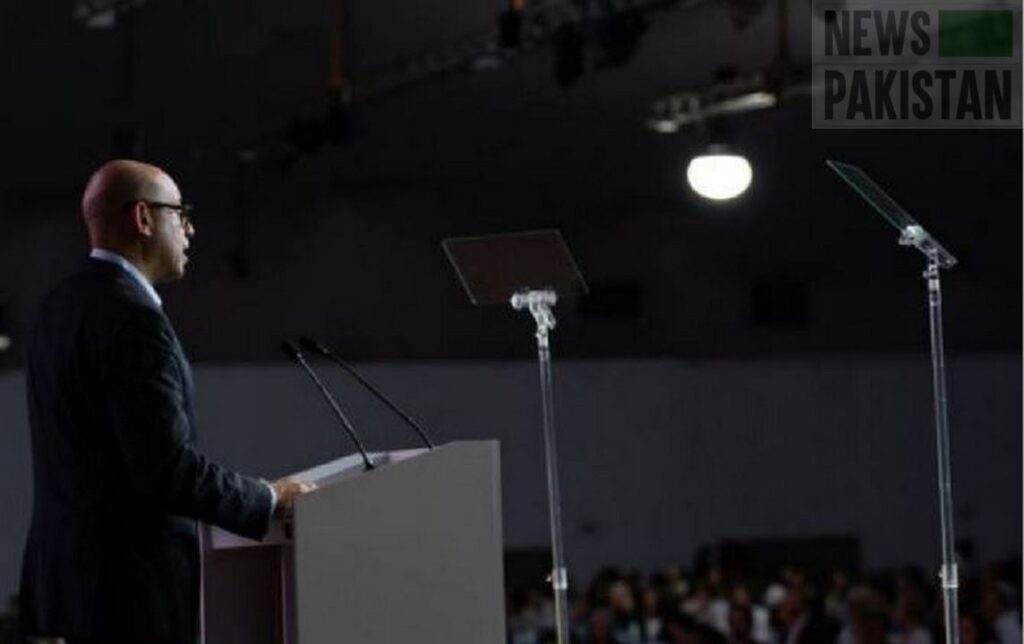
UN Climate Change Executive Secretary Simon Stiell, during the closing plenaries of COP30 in Belém, Brazil, on Saturday 22 November 2025, stated:
Excellencies, Colleagues,
Dear Friends,
We knew this COP would take place in stormy political waters.
Denial, division and geopolitics has dealt international cooperation some heavy blows this year.
But friends. COP30 showed that climate cooperation is alive and kicking, keeping humanity in the fight for a livable planet, with a firm resolve to keep 1.5C within reach.
I’m not saying we’re winning the climate fight. But we are undeniably still in it, and we are fighting back.
Here in Belem, nations chose unity, science, and economic common sense.
This year there has been a lot of attention on one country stepping back.
But amid the gale-force political headwinds, 194 countries stood firm in solidarity – rock-solid in support of climate cooperation.
194 countries representing billions of people have said in one voice that “the Paris Agreement is working”, and resolved to make it go further and faster.
We see progress in a new agreement on just transition, signaling that building climate resilience and the clean economy must also be fair, with every nation and every person able to share in its vast benefits.
We see it in the agreement to triple adaptation finance.
Ensuring more countries have the support they need, even as climate disasters wreck lives and slam into global supply chains, on which every economy depends.
For the first time, 194 nations said in unison:
‘…the global transition to low greenhouse gas emissions and climate-resilience is irreversible and the trend of the future.’
194 nations agreed this word by word, because it is the truth – backed up by investment flows into renewables that now double fossil fuels.
This is a political and market signal that cannot be ignored.
In this new era, we must bring our process closer to the real economy, to deliver concrete results faster, and spread the benefits to billions more people.
At COP30 – through the Action Agenda – that is exactly what we did.
A trillion dollars for clean grids.
Hundreds of millions of hectares of forest, land and oceans protected or restored.
Over 400 million people becoming more resilient. And many more.
These achievements are not a side-show – they are real-world progress on the things billions of people care about most.
Outside these halls, billions are asking basic questions: Will there be enough food for my family?
Will I be able to pay my fuel bill?
Will my child breathe clean air?
Are the people and places I love, will they be safe from the next flood, fire, or storm?
This COP has started to deliver on these everyday concerns. Not perfectly, not fast enough but concretely.
Markets are moving, and a new economy is rising. The old polluting economy is running out of road.
But disinformation is trying to keep it alive. Its impacts run deep.
It has distorted the political landscape.
It obscures the experiences of people around the world living under severe personal strain.
The multiple effects of climate change fuel fear. Disinformation then weaponises it.
So as climate pressures push up prices, economies destabilise and communities are put under strain.
Disinformation actors are opportunistic – they exploit that anxiety. Everything is blamed except the real cause.
A COP of truth is fighting back. It also means we must also be realistic.
Many countries wanted to move faster on fossil fuels, finance, and responding to spiraling climate disasters.
I understand that frustration, and many of those I share myself.
But let’s not ignore how far this COP has moved us forward.
With or without Navigation Aids, our direction is clear: the shift from fossil fuels to renewables and resilience is unstoppable.
We’ve committed to speeding up the full implementation of national climate plans, and to strive to do better, collectively and cooperatively, together with the Action Agenda, driving forward this acceleration.
For two weeks each year, COP brings climate to the top of the agenda. As we leave here, our job is to keep it there for another fifty.
We’ve now seen the Indigenous word for a collective effort – ‘mutirão’ – in action.
We need to carry on this spirit of mutirão that has won out here at COP30, and for that, I thank the Presidency, the people of Brazil, my colleagues at the Secretariat and all of you.
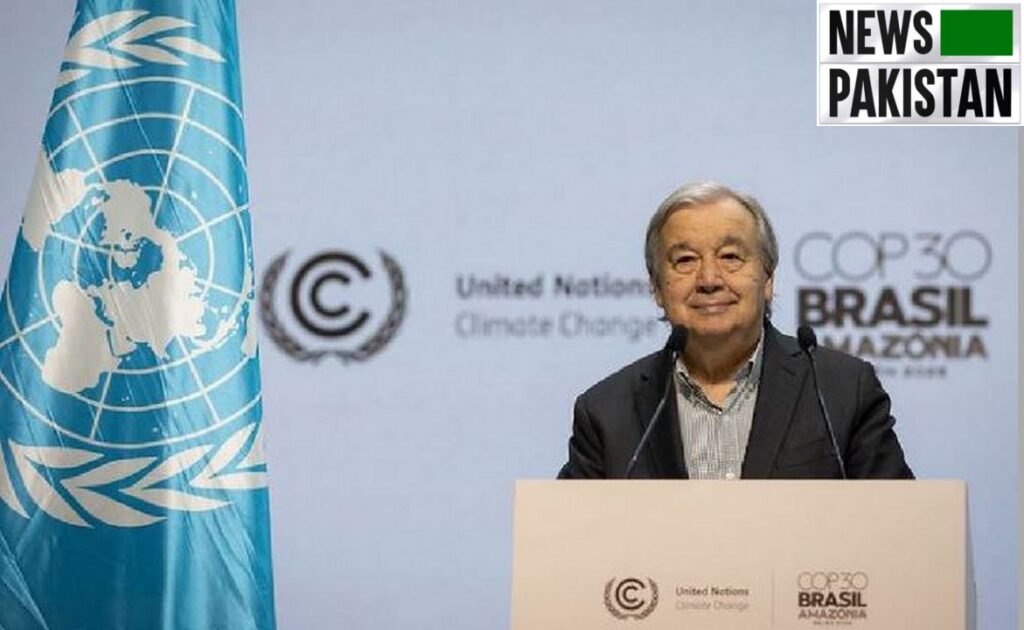
Statement by the Secretary-General – on the agreement at COP30:
“I thank President Lula da Silva, COP 30 President André Corrêa do Lago and his team, the Government of Brazil, the people of Belém, and the UNFCCC Secretariat for their hospitality and tireless efforts to make this COP possible.
At the gateway of the Amazon, Parties have reached an agreement.
This shows that multilateralism is alive, and that nations can still come together to confront the defining challenges no country can solve alone.
COP30 has delivered progress – including a call to triple adaptation finance by 2035 as a first step towards closing the adaptation gap;
A Just Transition Mechanism to support countries in protecting workers and communities as they shift to clean energy;
A new dialogue aimed at enhancing international cooperation on trade;
The recognition that we are now heading for a temporary overshoot above 1.5 degrees Celsius;
The launch of a Global Implementation Accelerator to close the ambition and implementation gaps and accelerate the delivery of Nationally Determined Contributions;
And a recognition to take forward the outcomes of the UAE Consensus, which includes a just, orderly, and equitable transition away from fossil fuels.
But COPs are consensus-based – and in a period of geopolitical divides, consensus is ever harder to reach.
I cannot pretend that COP30 has delivered everything that is needed.
The gap between where we are and what science demands remains dangerously wide.
I understand many may feel dissapointed – especially young people, Indigenous Peoples and those living through climate chaos.
The reality of overshoot is a stark warning: we are approaching dangerous and irreversible tipping points.
Staying below 1.5 degrees by the end of the century must remain humanity’s red line.
That requires deep, rapid emission cuts – with clear and credible plans to transition away from fossil fuels and towards clean energy.
It requires climate justice and a massive surge in adaptation and resilience – so communities on the frontlines can survive and recover from the climate disasters to come.
And it requires far more climate finance for developing countries to reduce emissions, protect their people, and address loss and damage.
COP30 is over, but our work is not.
I will continue pushing for higher ambition and greater solidarity.
To all those who marched, negotiated, advised, reported and mobilised: do not give up.
History is on your side – and so is the United Nations.“
Joint Media statement from the COP30 Presidency and UN Climate Change:
“Earlier today, a fire broke out in the Blue Zone of the COP30 venue in Belém. The fire department and UN security officers responded swiftly, and the fire was controlled in approximately six minutes. People were evacuated safely.
13 individuals were treated on site for smoke inhalation. Their condition is being monitored, and appropriate medical support has been provided.
As a precaution, the Brazilian Government and the UNFCCC have jointly decided to temporarily close the Blue Zone while the fire department carries out a comprehensive safety assessment.
Delegates are requested to await further official communication, which will be issued at 8:00 PM this evening, once the venue has been thoroughly evaluated and deemed fully safe.
We appreciate the cooperation and understanding of all participants as we prioritize the safety of everyone involved.
Please note that the Green Zone remains open and activities continue as scheduled.”
Newspakistan.tv